Hardtail vs. Full Suspension – Which Mountain Bike Is the Right Choice for You?

Hardtail vs. Full Suspension – Which Mountain Bike Is the Right Choice for You?
When you’re shopping for a mountain bike, one of the first questions you’ll face is: should you go for a hardtail or a full suspension? The decision isn’t just about price—it’s about your riding style, the terrain you love, and how much maintenance you’re willing to handle. Both types have their strengths and trade-offs. Here’s a guide to help you choose the mountain bike that fits you best.
What Do “Hardtail” and “Full Suspension” Mean?
A hardtail mountain bike has front suspension only—usually in the fork—while the rear frame is rigid. It’s simple, lightweight, and efficient, especially on smoother trails, dirt roads, and climbs.
A full suspension bike, on the other hand, has suspension both in the front and rear. This setup provides more comfort and control on rough terrain but adds weight and complexity.
In short: the hardtail is the simple, efficient option, while the full suspension is the comfortable, high-tech choice.
Advantages of a Hardtail – Light, Direct, and Budget-Friendly
Hardtails are popular among both beginners and experienced riders who value simplicity and efficiency.
- Lower weight: Without a rear shock and extra linkages, the bike is lighter—great for climbing and long rides.
- Less maintenance: Fewer moving parts mean fewer things to service or replace.
- Better power transfer: With a rigid rear end, more of your pedaling energy goes straight into forward motion.
- More affordable: You’ll often get higher-quality components for the same price compared to a full suspension.
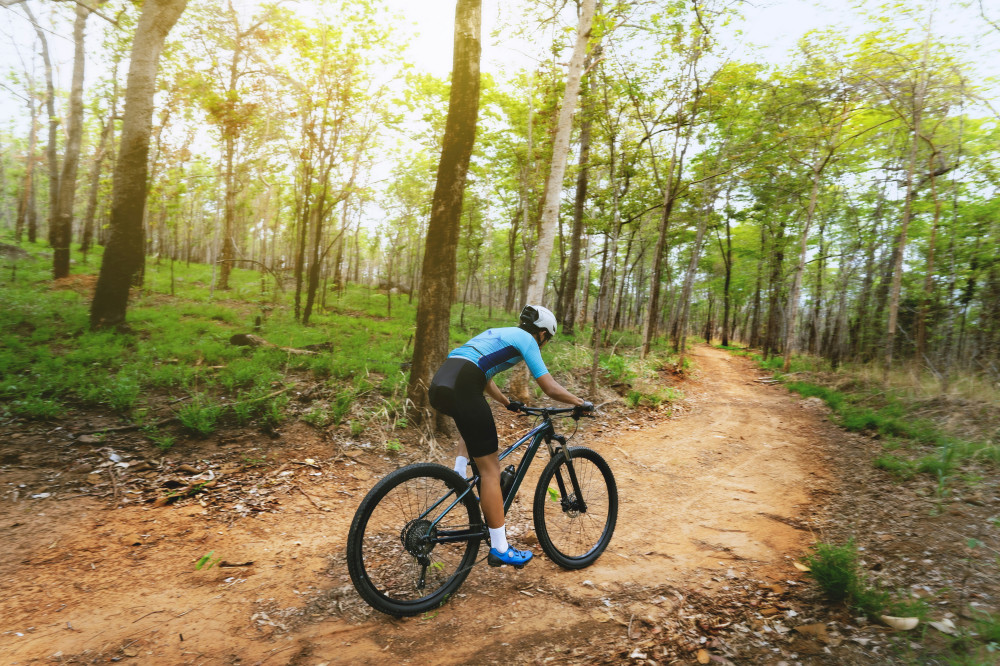
A hardtail is a great choice if you mostly ride on gravel paths, forest trails, or smoother singletrack—or if you want a versatile bike that can double as a commuter.
Advantages of a Full Suspension – Comfort and Control on Rough Trails
Full suspension bikes are built for technical terrain—think roots, rocks, and drops.
- More comfort: The rear shock absorbs bumps, reducing fatigue on long rides.
- Better traction: Suspension keeps your tires in contact with the ground, improving grip and control.
- Faster on rough terrain: You can maintain speed over obstacles instead of bouncing around.
- More forgiving: For newer riders, the suspension can help smooth out mistakes and boost confidence.
The trade-offs? More maintenance and extra weight. But for many riders, the added comfort and control are well worth it.
What Kind of Rider Are You?
Your choice between hardtail and full suspension depends largely on how and where you ride.
- The beginner: A hardtail is often the best starting point. It teaches you to read the trail and develop good technique—and it’s easier on your wallet.
- The adventurer: If you love long rides on mixed terrain, a lightweight full suspension can give you comfort without sacrificing too much efficiency.
- The trail enthusiast: If your local trails are full of rocks, roots, and drops, a full suspension will give you better control and confidence.
- The racer: Many cross-country racers still prefer hardtails for their light weight and efficiency, while enduro and trail riders swear by full suspension.
Price and Maintenance – The Practical Side
A hardtail is generally cheaper to buy and maintain. You can get a solid hardtail for a fraction of the cost of a comparable full suspension. Plus, you’ll spend less time and money on servicing—no rear shock or pivot bearings to worry about.
That said, if you ride a lot of technical trails, a full suspension might offer better long-term value. The comfort and control can make your rides more enjoyable—and that’s what really matters.
Læs også:


How to Choose the Right Bike
When deciding, ask yourself these questions:
- Where do you ride most? Smooth trails and gravel roads favor a hardtail; rocky, steep trails call for full suspension.
- What’s your budget? A quality hardtail at $1,500 may outperform a cheap full suspension at the same price.
- How much maintenance are you willing to do? More suspension means more upkeep.
- What feels best? If possible, test ride both types. Comfort and handling are personal.
Conclusion – It’s All About the Ride
There’s no single “right” choice—only the one that fits your riding style and goals. A hardtail is light, efficient, and simple. A full suspension is comfortable, controlled, and fun on technical trails.
If you’re new to mountain biking, start with a hardtail and build your skills. If you’re already hooked and want to tackle tougher terrain, a full suspension can open up a whole new world of riding.
Whichever you choose, the most important thing is that your bike inspires you to get out and ride—again and again.
Læs også: